The Harold Grad Lecture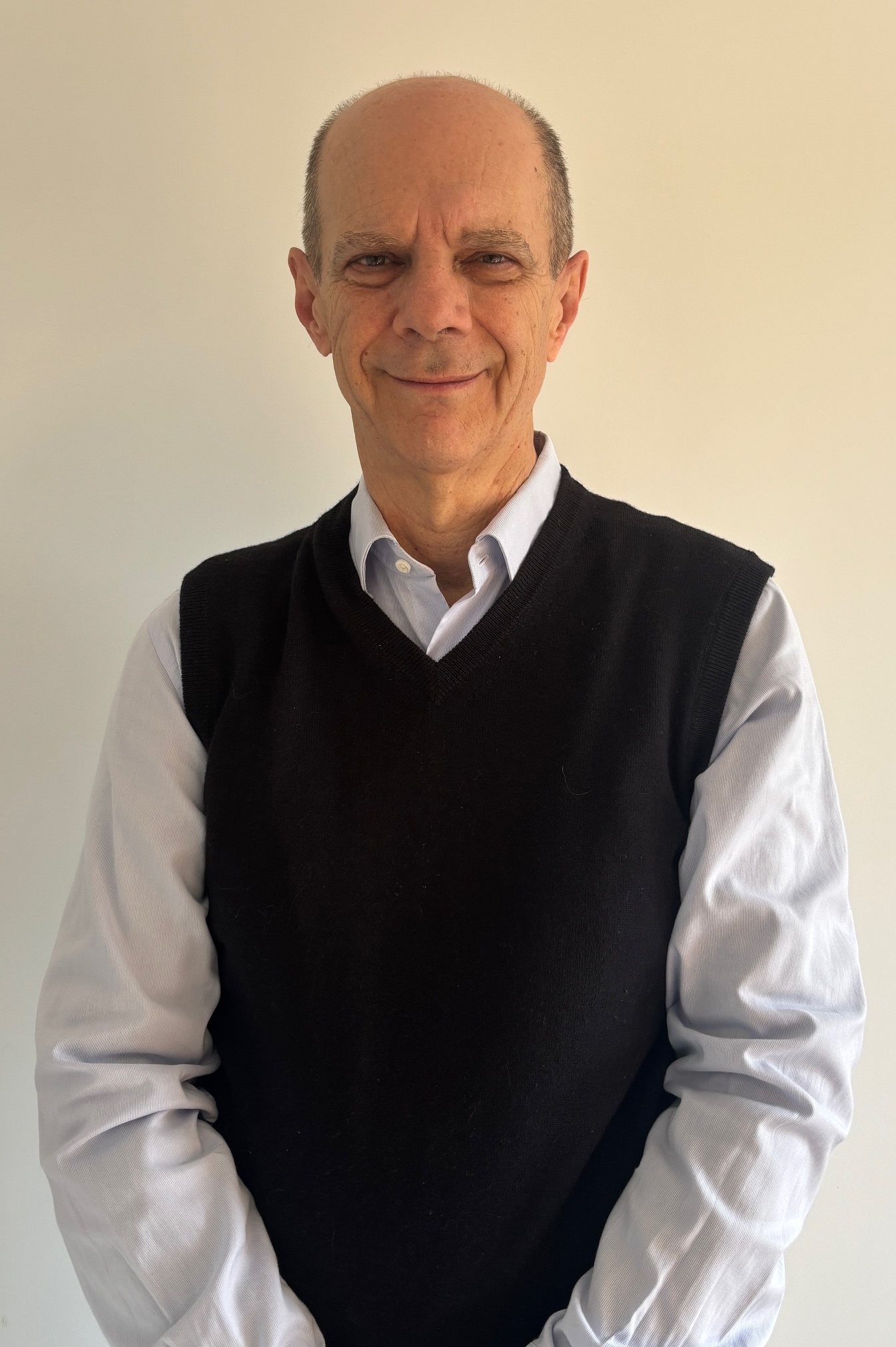
Dr Domenico Giordano, ESA (retired)
“Reflections on my experience with the kinetic theory”
Dr Domenico Giordano earned his degree cum laude in Aeronautical Engineering from the University of Naples in July 1984, completing a program of study with strong emphasis on aerospace specialization. After completing his military service as second lieutenant in the Italian Army, he spent several months-from January to July 1986-working at FIAT Aviazione in Turin as an engineer, focusing on turbine‑blade heat‑transfer protection.
Dr Giordano joined the European Space Agency in December 1986 and was assigned to the European Space Research and Technology Centre (ESTEC) in Noordwijk, The Netherlands. He spent three years in the Analysis and Programming section, where he developed expertise in computational fluid dynamics and hypersonic aerodynamics. He then transferred to the Aerothermodynamics section, where he broadened his expertise across several advanced disciplines; his work focused on high‑temperature, non‑equilibrium gas dynamics for both internal and external flows, thermodynamics, and chemical and thermal kinetics. He also acquired expertise in electromagnetic fluid dynamics, deepening his understanding of complex physical processes relevant to atmospheric entry. His staff‑member duties included serving as technical officer for ESA’s technological research programme and general-studies programme and providing technical support to ESA’s projects. In addition, Dr Giordano acted as tutor for undergraduate, graduate, PhD students, and post‑doctoral research fellows.
Dr Giordano earned his PhD cum laude from the École Polytechnique Universitaire de Marseille in November 2005, completing a dissertation titled “On the Statistical and Axiomatic Thermodynamics of Multi‑Temperature Gas Mixtures.” In May 2012, he was seconded to the von Kármán Institute for Fluid Dynamics, where he served as a visiting professor responsible for teaching two courses: Physical Fluid Dynamics and Fundamental Disciplines of Aerothermodynamics.
In 2014, he returned to his duties at ESTEC, where he remained until his retirement in May 2017. Since then, Dr Giordano has continued to pursue scientific research, developing a growing interest in self‑gravitating fluids and general relativity.
 The Irving Langmuir Lecture
Dr Shahid Rauf, Applied Materials, Inc.
"Rarefied Plasmas for Nanofabrication: Modeling, Diagnostics and Applications"
Shahid Rauf serves as Managing Director of Plasma Products Modeling (PPM) at Applied Materials, Inc., a global leader in materials engineering solutions for semiconductor and display fabrication. The PPM team leverages advanced physics-based modeling to design products for plasma-assisted processes, including etching, deposition, selective removal, and atomic layer deposition. The PPM team is widely recognized within Applied Materials and externally for pioneering innovative methods for modeling semiconductor industry relevant plasmas, developing cutting-edge plasma processing tools, and advancing the physics understanding of plasma etch and deposition technologies. Shahid Rauf received the Plasma Prize from the AVS Plasma Science & Technology division in 2024. In addition, Shahid Rauf and colleagues won the prestigious Patent Hall of Fame award at Applied Materials in 2020 for patents related to the design of Sym3®, the company’s world-class plasma etch system. Shahid Rauf is the inventor on more than 100 granted patents and has authored more than 100 scientific publications. Prior to joining Applied Materials, Shahid Rauf worked at Motorola (Semiconductor Products Sector) and the University of Illinois Urbana-Champaign, USA. He received his PhD in Electrical & Computer Engineering from the University of Wisconsin - Madison, USA.
 The Lloyd Thomas Lecture
Professor Irina Graur, Aix-Marseille University
"Gas transport at microscale and low pressure: experiments and simulations"
Prof. Irina Graur obtained her M.Sc. in Applied Mathematics from Moscow Lomonossov State University in 1984, followed by a PhD also from the same institution in 1989. She later earned her Habilitation from Provence University in France in 2008. From 1984 to 2000, she was an associate professor at the Keldysh Institute of Applied Mathematics in Moscow. She is currently a professor at Aix-Marseille University in France. Her research has significantly contributed to the study of rarefied gases in aerospace applications. Her current interests focus on the experimental and numerical characterization of gas properties at micro- and nanoscale levels. She leads the research group “Non-Equilibrium Phenomena and Microfluidics” at the IUSTI Laboratory. Additionally, she has organized numerous international conferences, workshops, and summer schools. She has co-authored over one hundred journal articles and conference papers.
Talk summary:
Relatively high Knudsen number flows are encountered in many fields, as the vacuum technology and space applications due to the low operating pressure, as well as in MEMS systems and micro porous media due to the small characteristic dimensions. During several years, we have developed the experimental methodologies to characterize the transport properties of such flows.
For each measurement a model, usually based on the kinetic theory, was developed, allowing the extraction of different flow characteristics. Experimental data for velocity slip and thermal slip coefficients for single gases and gas mixtures are discussed. For flows driven by temperature gradients, experimental data for the thermomolecular pressure difference and the flow relaxation time are analyzed.
All these data are obtained using models that rely, among other parameters, on the known characteristic dimension of a dispositive, such as the diameter or cross-sectional area in the case of a channel. However, for porous samples this information is not directly available. Examples of the characterization of microporous media, including permeability and the Klinckenberg factor, are presented even though a characteristic dimension is not clearly defined for this type of medium. Modeling based on gas kinetic theory enables the extraction of useful parameters, such as the “characteristic flow dimension” of a porous medium, will be discussed. Several examples illustrating the application of this methodology to various types of porous media and different gases are presented for both isothermal and non-isothermal conditions.
The Graeme Bird Lecture
Professor Thomas E. Schwartzentruber, The University of Minnesota
"Direct molecular simulation of hypersonic flow and gas-surface scattering for VLEO"
Tom Schwartzentruber received his Bachelor’s degree in engineering science and his Master’s degree in aerospace engineering from the University of Toronto. He then received his doctorate degree in aerospace engineering from the University of Michigan. For his doctorate work he received the AIAA Orville and Wilbur Wright graduate award. He joined the faculty in the Aerospace Engineering and Mechanics department at the University of Minnesota in 2008, after which he received a Young Investigator Program Award from the AFOSR and the University of Minnesota Taylor Career Development Award for exceptional contributions by a candidate for tenure. He specializes in particle simulation methods such as direct simulation Monte Carlo (DSMC) and molecular dynamics (MD), including coupling such methods with each other and with continuum computational fluid dynamics (CFD) methods. Currently, his research group is involved in a number of projects spanning hypersonic nonequilibrium reacting flows, gas-surface interactions and ablation, hybrid particle-continuum methods, and satellite material effects in low earth orbit.
Talk summary:
Predicting what happens as a hypersonic vehicle flies through the atmosphere involves a lot of interesting physics. The strong shock wave, generated ahead of the vehicle, superheats the air to thousands of degrees and partially dissociates the air into atomic oxygen and nitrogen. The vehicle heat shield must simultaneously withstand high temperatures and intense surface chemistry driven by these reactive atomic species. We have reached the point where this thin shock layer can be studied at the scale of individual molecular collisions. Direct molecular simulation (DMS) can now be performed where the only model input consists of the forces between atoms as dictated entirely by quantum chemistry. The direct simulation Monte Carlo (DSMC) method lies at the heart of the DMS method and has enabled significant insight into aerothermodynamics for hypersonic flows. In this presentation the DMS method will be described and results for internal energy relaxation, chemical kinetics, and multi-component diffusion will be highlighted. Furthermore, new models for computational fluid dynamics (CFD) and DSMC, that are based on DMS results, will be summarized. Finally, there is significant interest in flying hypersonic vehicles very high in the atmosphere and operating satellites in very low earth orbit (VLEO). At such altitudes, the flow transitions from continuum to free-molecular and gas-surface scattering dominates lift and drag. The presentation will conclude with lift and drag predictions for VLEO flight using a new gas-surface scattering model that is based on molecular beam data.