
For Dr Jesse Streicher, some of the world's biggest engineering challenges come down to one thing - understanding how chemicals behave in extreme environments.
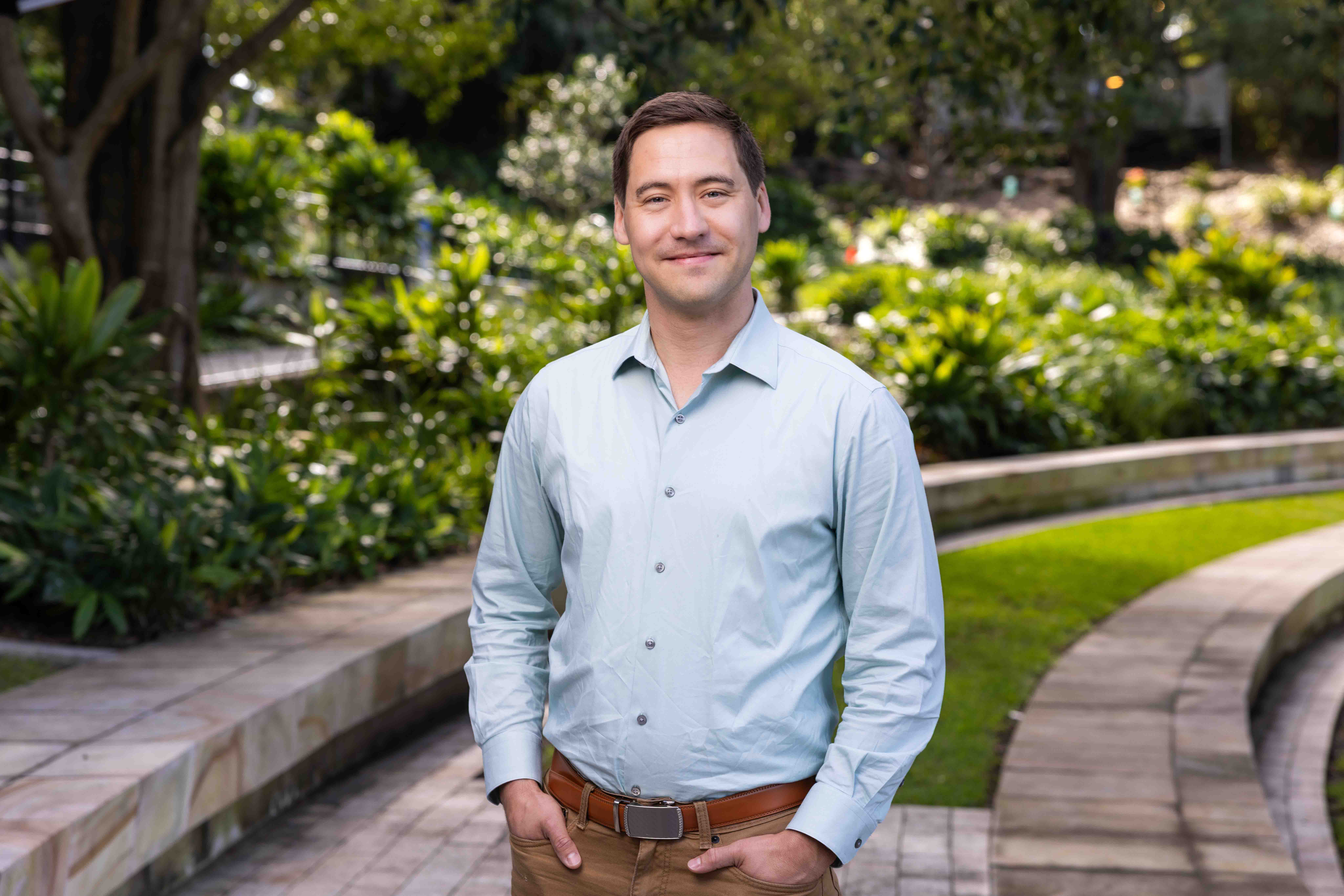
Having recently joined UQ's School of Mechanical and Mining Engineering from Stanford University, Jesse uses laser absorption spectroscopy to explore some of the most extreme environments imaginable. His research is helping unlock new possibilities in spaceflight, clean energy and sustainable chemical production.
"My research uses lasers to understand how chemicals behave in situations that are very difficult to measure," he says.
Looking beyond Earth
One focus of Jesse's research is spacecraft re-entry.
"When a spacecraft returns to Earth, there's a layer of glowing hot gas around it," he explains. "To design safer and more efficient spacecraft, we need to understand exactly what's happening in that environment."
By using lasers as highly sensitive measurement tools, Jesse studies how chemicals and energy behave under these extreme conditions, helping researchers improve scientific models and design better technologies for future space missions.
Jesse believes the same scientific knowledge could also open new opportunities in space.
One possibility is manufacturing specialised materials in orbit, where unique conditions can't be replicated on Earth.
"There are some materials, like pharmaceuticals, that could potentially be made better in space than they can on Earth due to the very low gravity there," he says.
Making that vision a reality will require safer and more efficient space travel, as well as a deeper understanding of the harsh conditions spacecraft encounter.
Building a more sustainable future
The same physical processes that occur around re-entering spacecraft can also be found in laboratory plasmas used for chemical processing and emerging energy technologies much closer to home.
For Jesse, that's what makes the research so rewarding.
"The same science can help us solve very different problems," he says.
He studies how alternative fuels behave during combustion, helping researchers understand whether bio-derived and sustainable fuels could be used more effectively in industries such as aviation.
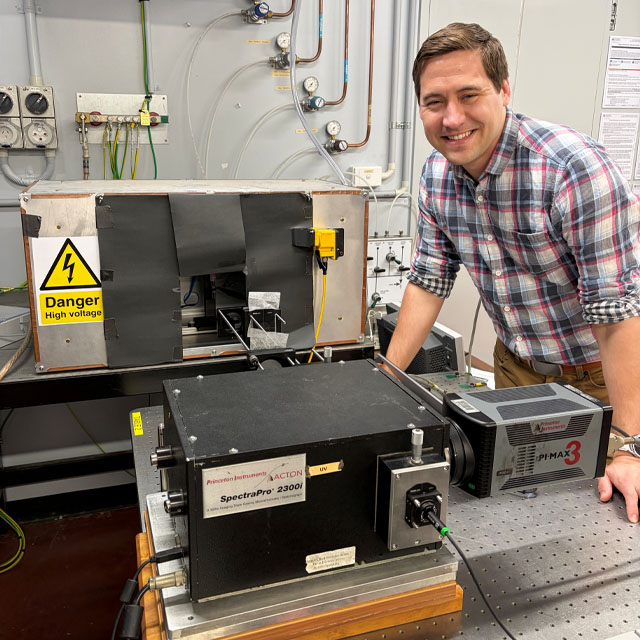
"We can use lasers to compare new fuels with conventional fuels and understand how they perform," he says.
He's also interested in plasma-based technologies that could reduce emissions from major industrial processes, such as fertiliser production, which is responsible for significant global carbon emissions.
"There's growing interest in using renewable electricity to power plasma systems that can produce key chemicals more sustainably," Jesse says.
"That could help reduce emissions and bring production closer to the communities that need it."
From the farm to the future
Jesse's interest in solving complex challenges began long before his career as a researcher.
Growing up in the American Midwest, he spent time on his grandparents' farm, where he saw firsthand the systems that support agriculture and food production.
"It was inspiring to see the ways we designed systems to feed our communities," he says.
"From an early age, I could see how much thought, science and engineering go into something as fundamental as growing food. That experience helped shape my interest in tackling large-scale problems that have real impacts."
Today, that curiosity extends from the farm to the frontiers of space, and as Jesse builds his research program at UQ, he is using laser absorption spectroscopy to uncover new insights into the extreme environments shaping future technologies.
"It's exciting to work on some really ambitious scientific challenges," he says. "At the same time, we can help build a more sustainable future."


