
This year marks a major milestone for engineering education at The University of Queensland, with the first cohort completing UQ's redesigned mechanical engineering curriculum.
Developed in partnership with Siemens Digital Industries Software and informed by extensive industry consultation, the curriculum is built around three capabilities modern engineers need - technical competence, systems thinking and the ability to work in the digital environments where engineering is increasingly practised.
Together, these capabilities teach students to grasp the whole of a system, over the whole of its life.

with Course Coordinator Dr Luigi Vandi
For Professor Ross McAree, Head of UQ's School of Mechanical and Mining Engineering, these capabilities are what distinguish graduates who can contribute from those who can lead.
"The challenges facing industry today are rarely technical problems alone. They are systems problems that require engineers to work across disciplines, manage competing requirements and collaborate effectively with others. That's the capability employers are increasingly looking for, and it's what we've designed this curriculum to develop."
From technology to transformation
The transformation began in 2018 when Siemens provided UQ access to leading engineering software. But, as Professor McAree explains, technology alone was never the goal.
"A gift of digital tools is not a plan. We knew that if we wanted to prepare graduates for contemporary engineering practice, we needed to redesign the curriculum itself, not simply add software to existing courses."
Working alongside Siemens and industry partners, UQ redesigned courses across the program so students progressively develop technical, systems and digital capabilities, culminating in a third-year systems engineering challenge.
Samantha Murray, Vice President and CEO Australia and New Zealand at Siemens Digital Industries Software, said the partnership focuses on preparing graduates for the realities of modern engineering.
"We need graduates who can collaborate across disciplines, manage complexity and understand how decisions made early in a project affect outcomes across an asset's entire lifecycle. What UQ has created is a new model for preparing engineers to work in the environments they will encounter throughout their careers," Samantha said.
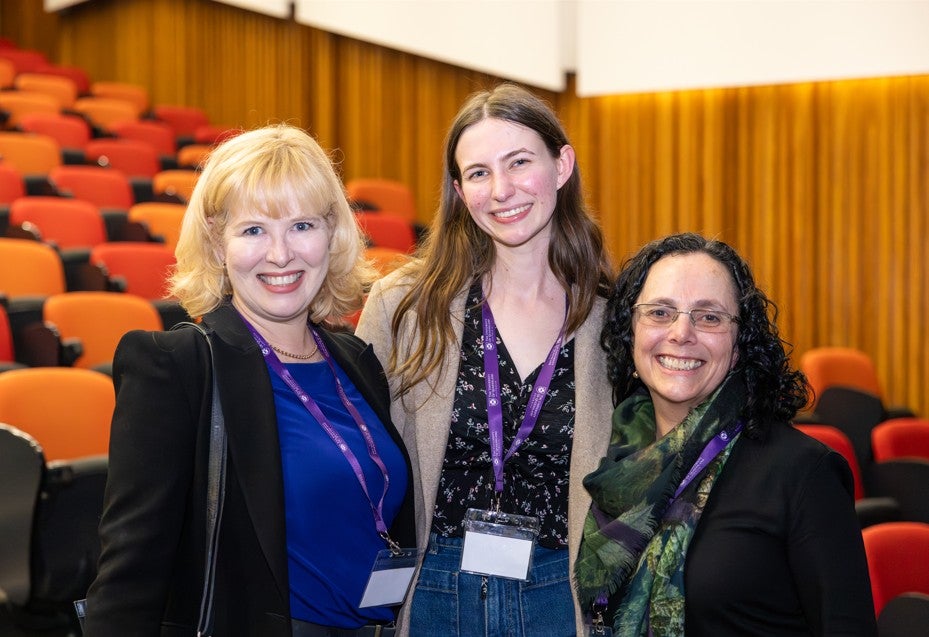
and Samantha Murray, Siemens Digital Industries Software
Seeing the whole system
Dr Luigi Vandi, course coordinator of the redesigned program, said systems thinking is becoming an essential capability for modern engineers.
"An engineer who can only solve the problem in front of them is of limited use on a large project. The engineer who can hold the whole system in view, and see how every part serves its purpose, is the one industry needs."
Working across the whole life of the system
Instead of treating design, manufacturing and operations as separate activities, students learn to consider how decisions made at one stage affect outcomes across an asset's entire lifecycle.
The design students develop is not a drawing to be filed away. It becomes the beginning of the same digital model that can be carried forward to build, operate and maintain an asset throughout its life,
That same digital environment is how large, dispersed teams work as one. And it carries a commercial edge: for major assets, owning and operating them costs several times more than building them, so early choices shape outcomes for decades.
Proof it’s working
The results were showcased at UQ's inaugural Systems Engineering Showcase, where finalist teams developed solutions to a real healthcare challenge.
Leader of the winning student team, Ella Aird said the experience changed how her team approached engineering. "Connecting with real stakeholders, like clinicians, and understanding how they may depend on what we design made the assignment feel like more than just a grade. It felt like and invaluable experience to link my piece of work into a much larger puzzle." Ella said.
For Professor McAree, the showcase demonstrated something broader than student competition. "What we're celebrating is the successful delivery of a new model of engineering education, one that reflects how industry works today and equips graduates with the skills they'll need for the future." he said.
Huge thanks to the whole team of academics and professional staff, and to our industry partner for bringing this redesign to fruition.


